
Hand Placement Options
Traditional swaddles lock babies into one hand position. Swaddle Easy gives you options — so you can adapt to your baby’s unique preferences as they grow.
Every Baby Is Different
Traditional swaddles assume all babies want their hands in the same position. Real life isn’t that simple.
- Some babies love their hands up by their face, ready to self-soothe by sucking.
- Others prefer their hands down at their sides, feeling fully contained and secure.
- Many are happiest with hands resting on their chest or belly, mimicking the comfort of the womb.
- And those preferences don’t stay the same. What works at two weeks often doesn’t work at two months.
Swaddle Easy gives you all of these options in one swaddle — so you can adjust as your baby grows and their needs change.
The 6 Hand Positions
-
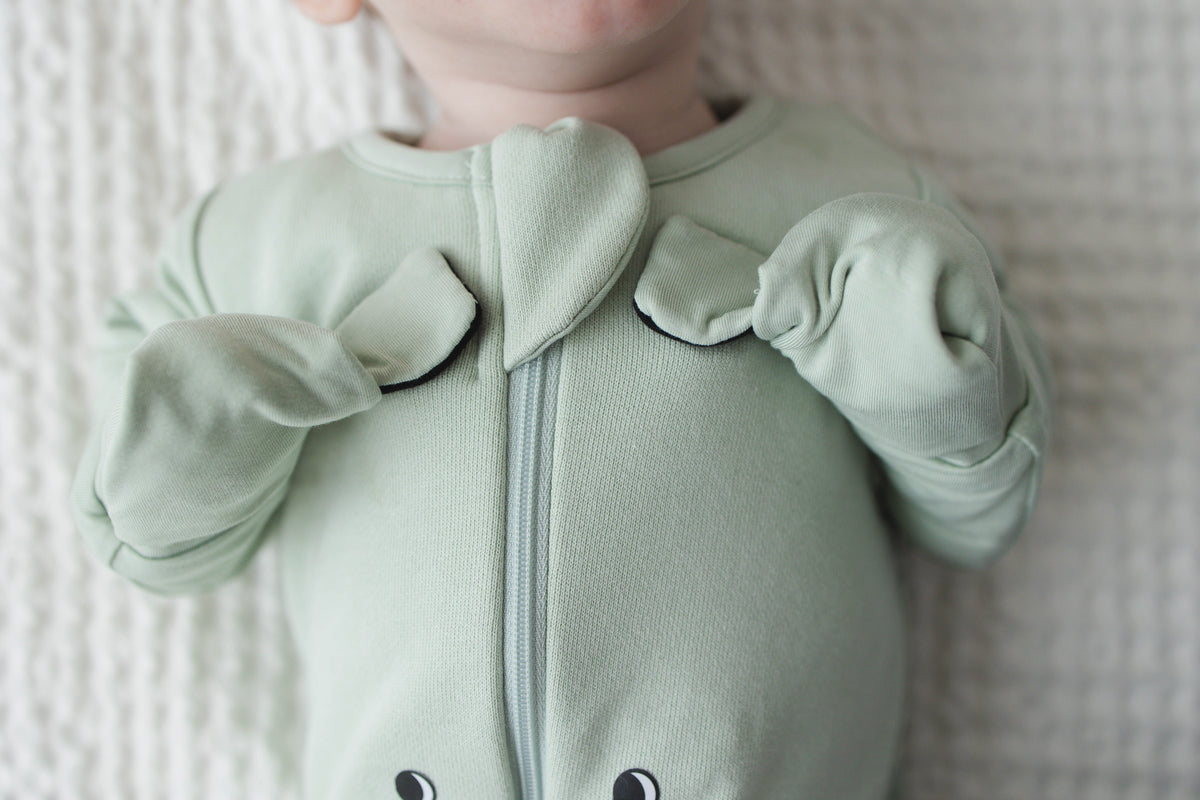
Hands on chest
Designed for babies who like to keep their hands near their face.
Great for: Younger newborns and Fussy sleepers who fight arms-down swaddles
-

Hands on belly
Designed to evoke the position babies often hold in the womb, supporting a sense of ease without fully restricting movement.
Great for: Babies who want some movement, not full freedom
-

Hands at sides
Arms are gently held alongside the body, designed to muffle the startle reflex while promoting a snug, secure feeling.
Great for: Very young newborns, babies with strong startle reflex


-

One up, one down
One hand rests on the chest while the other stays at the side. This balanced option is designed to maintain a snug feel.
Great for: Babies transitioning between positions or showing mixed preferences.
-

Criss Cross
Hands are placed across the body for the most secure, cocoon-like feel. This option provides a secure, cocoon-like feel for babies who love deep pressure.
Great for: Extra-snuggly sleepers and babies who startle easily.
-

One in, one out
Ideal for supporting the transition out of the swaddle. One arm gets freedom while the other stays contained, designed to help baby gradually adjust to having arms free.
Great for: 4 month sleep regression, swaddle transition


When you combine these different positions you end up with 24 different combinations.
Note: Use the swaddled positions only for babies who are not yet attempting to roll over. Once your baby shows signs of rolling, transition to an 'arms-out' position to ensure they can move freely for safety
Why multiple options matter
-
Personalized comfort
Every baby is unique. With 24 combinations, you can experiment to find exactly what helps YOUR baby sleep best.
-
Smooth swaddle transition
The dreaded swaddle transition becomes easier when you can gradually adjust. Slowly increase freedom at baby's pace, with the same swaddle they're used to.
-
Navigate Sleep Regressions
During the 4-month sleep regression, many babies suddenly resist their usual swaddle position. Instead of abandoning swaddling you can try to a new hand placement.
FAQ
-
Start with what feels natural. If baby brings hands to mouth when awake, try hands-up positions. If they seem calmer with full containment, try hands on chest or at sides. Watch your baby's cues - if they're fighting the swaddle or taking longer to settle, try a different position. Most parents find the right fit within 2-3 tries.
-
Absolutely! That's where the 24 combinations come from. One hand up by face, one hand on belly. One hand at side, one hand on chest. Mix and match to find what works. This is especially useful during the swaddle transition when you want one arm free and one contained.
-
No - the swaddle itself provides the familiar feeling. What matters most is the secure containment and the familiar fabric. Babies adapt quickly to different hand positions, especially if the change makes them more comfortable. Think of it like adjusting a pillow - the bed is the same, you're just finding a better position.
-
The transition should begin at the first sign of your baby attempting to roll over.
While this often occurs between 3–5 months, every baby develops differently. Signs to watch for include increased trunk strength or shifting onto their side during sleep
-
Not at all! Many parents use different positions based on the situation. For example, hands-up for daytime when baby might wake and need to self-soothe, but full containment at night when you want the longest sleep stretches. Experiment to see what works best for different times of day.
-
Every hand placement option in the Swaddle Easy is designed to comply with safe sleep practices. The key is ensuring the swaddle is fitted correctly—snug around the chest but allowing for healthy hip movement—and that you transition to an arms-out position as soon as your baby shows signs of rolling
-
With the magnetic closure, changing hand positions takes just seconds. Simply slide the magnet free, adjust baby's arms to the new position, and done. It's designed to minimize disruption, allowing you to experiment with different positions while supporting your baby's rest.

